
 query@authorhousemedia.com
.png)
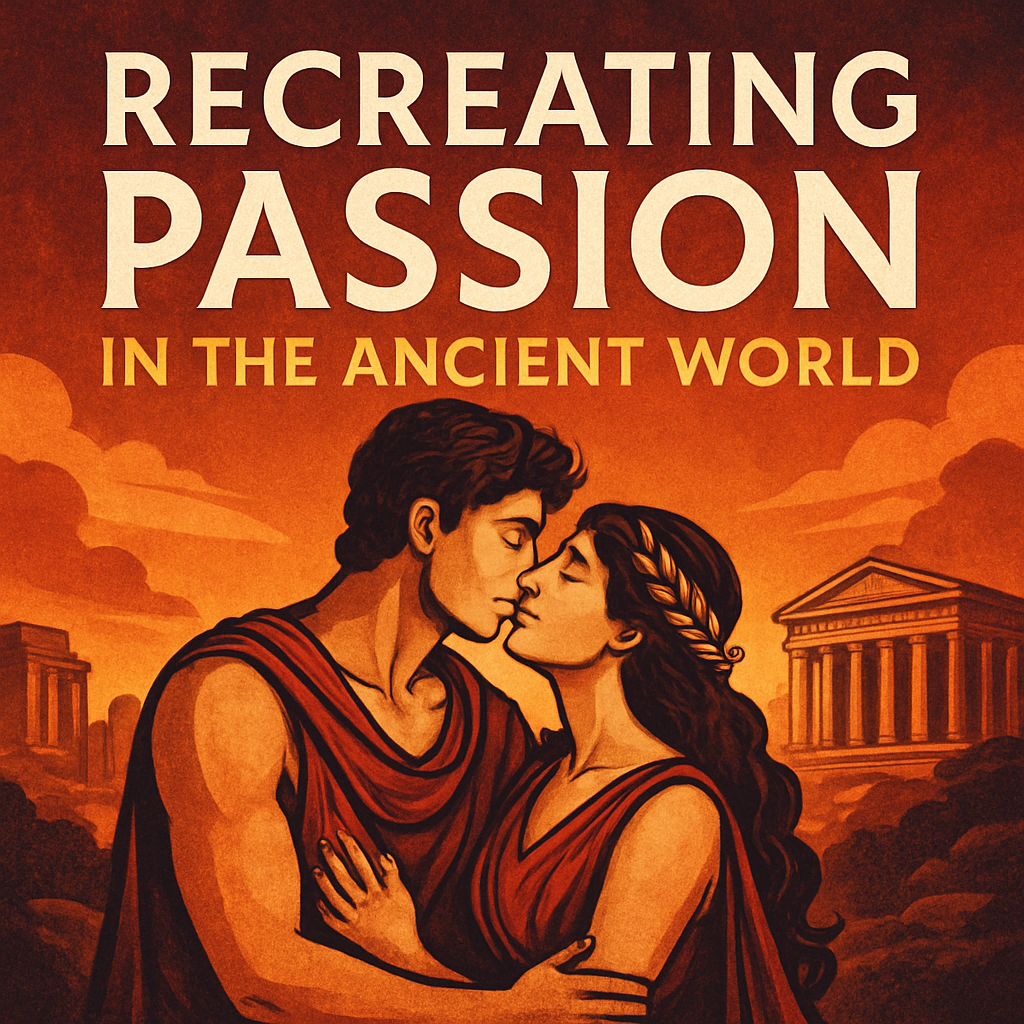
The biggest challenge for historical romance writers is translating raw and modern passion into something that is a believable dynamic in the strict and brutal confines of the ancient world. Love, whether in Pharaonic Egypt or in the days of the Roman Empire in a Roman court, was never about personal choice. That love was about power, property, and political maneuvers.
But how do authors make these historical constraints fuel the intense and timeless romance instead of putting forth mundane lessons of history? The answer lies in the mastery of narrative technique and proper research. Authors of ancient romance novels understand that passion is amplified in the absence of freedom.
What do such stories depict?
These stories did not depict accurate settings but rather the rigid class systems of that era. Political intrigue and daily survival create immediate barriers with high stakes for the characters.
Focusing on tiny and intimate acts of rebellion helped authors turn vast empires into a prison lovers wanted (and needed) to escape. A forbidden touch, a stolen look, or a whispered secret is what made the empires turn.
The authors used such historical detail so tactfully that it allowed the emotional core to resonate loudly with contemporary readers.
How can this blog post help?
This blog post will serve as a brief guide that explores certain secrets of the narratives of ancient romance novels. It will also go through the research methods that allowed modern authors to successfully recreate believable and fierce passion in the old world. This transformed boring history into a romance gripping and emotionally resonant.
“What if” – a powerful question that has shaped ancient romance novel writing
Ancient history usually comes to readers in a filtered manner, i.e., a filter of grand narratives, battles, political manipulations, politics, and the legacies of some of the finest men in history. The private lives, quiet heartbreaks, and daily desires of people are often lost in the sands of time.
Authors today have seized on these gaps. The question “what if” is a powerful one as it fills gaps & silences with emotional landscapes that are deeply imagined.
Take, for instance, the works of Madeline Miller, Circe and The Song of Achilleses; They take mythological figures and put them in human vulnerability. The stores explore love, loss, and desire in ways only the original myths hinted at. Doing so made these larger-than-life characters quite human.
What techniques have been used by ancient era romance novel writers?
Whenever an Ancient Romance Novel Author embarks on a new journey, there is no more valuable asset than those who have walked the same path before them. Prospective authors who have experienced the same worries and doubts, the same challenges, and have navigated the same complex questions have ultimately made a success of it.
That is the single most valuable thing they can do.
Now, when it comes to writing these ancient romance novels, authors who want to write them listen to those who have tasted and earned success in the genre. However, finding their advice is not easy,y and a lot of authors are great at giving interviews, speaking at events, and responding to queries. This does require a lot of homework.
But there is nothing to worry about. Contemporary authors have recreated that passion in the ancient world in their ancient romance novels through a fabulous blend of historical research with the sensibilities of modern storytelling.
The outcome? Readers were able to connect with characters who have experienced universal human emotions such as love, lust, and betrayal. Though they have lived in a very different era, authors achieve this through the use of vivid sensory details that led to the creation of authentic and accessible dialogue. This helped center their narratives on overlooked perspectives.
Let us now briefly examine the techniques they have used:
Immersion and in-depth research
Authors like Margaret George emphasize the self-hypnosis factor. Moreover, she also indicates the importance of conducting extensive research in the daily life, customs, and the political climate of that era.
The immersion helped them write from within the historical mindset. This ensured a character’s passions (romantic or not) were consistent with the norms of the society back then, along with time constraints. At the same time, they made it resonate with modern audiences.
Balancing accurate history with modern appeal
Details are indeed important, and authors avoid turning their work into a boring history lesson. They use historical information as seasoning to make an environment instead of overwhelming the plot.
When it comes to dialogues in any ancient romance novel, absolute historical accuracy is usually cut out for clarity and emotional connection. Yet the outdated language is carefully avoided to not to bore the readers.
A focus on marginalized voices
Authors who wrote a worthwhile ancient romance novel focused on marginalized voices. Many modern remakes focus on characters whose perspectives were largely ignored in the original historical sources. Wealthy males usually wrote them.
Authors like Christa Wolf and Madeline Miller were able to give voices to characters such as Cassandra and Circe. They explored their inner lives and passions in ways that have subverted traditional narratives.
Emotional intensity and universal themes put together
The authors focused on the human condition and private passions to help make the ancient characters relatable. There were themes of forbidden love, duty and desire, and of course, the quest for identity transcending time. This helped modern readers invest themselves deeply in the characters’ emotional journeys in a world far from their own.
Vivid and sensory details are added
Authors often employ rich and textured descriptions of the environment, food, clothing, and scent to captivate readers and immerse them in the ancient world. This tangible setting makes the experiences of characters feel more immediate and real (including their passions).
Conclusion
Authors have thankfully never contradicted the true essence of an ancient romance novel, irrespective of when they wrote them. They have written these stories in a way that has survived the test of time and has made it to the sights and minds of readers.
These stories are written in ways that immerse readers deeply. They have accurately depicted the struggles of each character in those eras, maintaining historical accuracy and relevance whilst making the stories as captivating as possible.
Frequently Asked Questions (FAQs)
Q: How do modern authors make ancient characters feel relatable to readers today?
A: They focus on universal human emotions fear of abandonment, desire for control, parental love, and the need for self-determination. While the characters’ circumstances are ancient, their internal emotional conflicts are timeless and immediately recognizable to the modern reader.
Q: How is explicit intimacy handled in a historically rigid setting?
A: Writers of Ancient Historical Romance often use the contrast of public rigidity versus private defiance to heighten passion. Intimate scenes are framed as acts of intense emotional or political rebellion, making them feel urgent and earned within the narrative constraints of the era.
Q: What is “Historical Anchoring” and why is it important?
A: Historical anchoring is the technique of using specific, verifiable historical facts (like a major battle, a plague, or a specific law) as the immutable background against which the fictional romance unfolds. This grounds the story in reality, increasing the dramatic weight of the fictional events.
Q: How do authors balance historical accuracy with romance conventions?
A: Romance takes precedence, but history provides the conflict. Authors ensure the key plot points and character motivations align with romance expectations (e.g., a “happily ever after” or “happily for now”), but they use the authentic, unromantic realities of the ancient world (disease, war, lack of rights) to create obstacles and tension.
Q: Should the dialogue sound like ancient Latin or Greek?
A: No. Authors use a neutral, formal English that avoids modern slang but also omits archaic language. The goal is to convey the feel of a distant era without sacrificing immediate clarity or accessibility for the reader.